Pets
How Much Wet Food to Feed a Cat
June 21, 2026
Discover how much wet food to feed your cat based on their age, size, and activity level. Ensure personalized nutrition for a healthy feline.
The amount of wet food a cat needs depends on factors such as body weight, age, activity level, food calorie content, and overall health. As a general guideline, many adult cats require enough wet food to meet their daily calorie needs, which may range from one to several cans or portions per day depending on the product size and nutritional density.
There is no single feeding amount that works for every cat. A small indoor cat may need less food than a larger, active cat, while kittens, senior cats, and cats with specific health needs may require different feeding plans.
Understanding your cat’s calorie requirements, reading food labels, and adjusting portions based on weight and body condition can help create a feeding routine that supports long-term health.
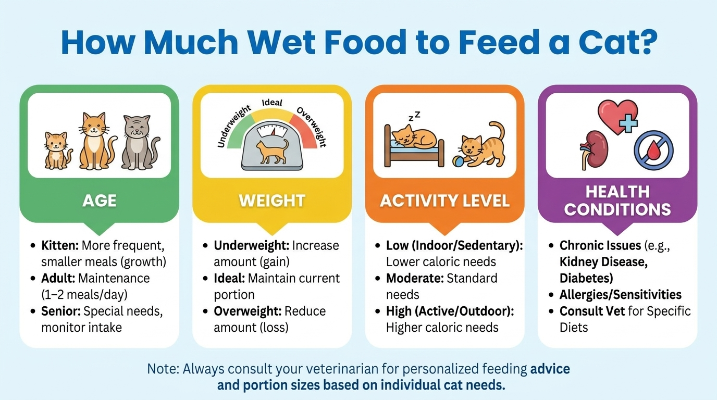
Factors That Determine How Much Wet Food Your Cat Needs
The right amount of wet food depends on several factors, including weight, age, activity level, reproductive status, and health condition. Because each cat has different energy requirements, feeding portions should be adjusted rather than following a single fixed amount.
Body Weight and Calorie Requirements
Body weight is one of the main factors affecting how much food a cat needs. Larger cats generally require more calories than smaller cats, but factors such as metabolism, body composition, and activity level also influence daily needs.
A common way to estimate calorie requirements is to first determine a cat’s resting energy needs and then adjust based on lifestyle factors. For example, a healthy 10-pound adult cat may require roughly 180–250 calories per day depending on activity level and individual metabolism.
Regularly monitoring weight and body condition is important because calorie needs can change over time.
Age and Life Stage
Age plays an important role in determining feeding requirements.
Kittens need more calories and nutrients because they are growing rapidly and developing muscle, bones, and other body systems. Adult cats usually require calories that maintain a healthy weight, while senior cats may need adjustments depending on activity level, health status, and changes in metabolism.
Choosing food designed for the appropriate life stage can help provide the right balance of nutrients.
Activity Level
A cat’s activity level also affects daily calorie needs.
Active cats that spend more time playing or moving around may require more calories than indoor cats with a less active lifestyle. Indoor cats, especially those with limited exercise opportunities, may need carefully controlled portions to prevent unnecessary weight gain.
Spay or Neuter Status and Health Conditions
Spayed and neutered cats often have lower calorie requirements because hormonal changes can affect metabolism and energy needs.
Health conditions can also influence feeding recommendations. Cats with obesity, diabetes, thyroid disorders, or other medical concerns may require specific dietary plans created with veterinary guidance.
How to Read Wet Cat Food Labels
Choosing the right wet food requires understanding the information provided on the label. The most important details include calorie content, nutritional adequacy, life-stage recommendations, and feeding instructions.
Calorie Content
Look for the calorie information listed as kcal per can, pouch, tray, or serving. This number helps determine how much food your cat needs based on their daily calorie target.
For example, two cans of food with different calorie densities may provide very different amounts of nutrition even if the can sizes are identical.
Nutritional Adequacy Statement
Check whether the food meets AAFCO (Association of American Feed Control Officials) nutritional standards for a complete and balanced diet.
This statement helps confirm that the food is formulated to provide essential nutrients for the intended life stage.
Life-Stage Information
Cat food labels usually indicate whether the formula is designed for:
- kittens;
- adult cats;
- senior cats;
- all life stages.
Selecting food appropriate for your cat’s age helps match nutritional needs with their stage of development.
Feeding Guidelines
Most packages include recommended feeding amounts based on weight. These instructions are useful starting points, but portions may need adjustment depending on your cat’s activity, body condition, and health.
How to Calculate the Right Amount of Wet Food
To estimate how much wet food your cat needs, follow a simple calculation:
Daily calorie requirement ÷ calories per can = number of cans needed per day
For example:
- Daily calorie requirement: 200 calories
- Wet food calories: 100 calories per can
Calculation:
200 ÷ 100 = 2 cans per day
This provides an estimated feeding amount. Adjustments may be needed depending on your cat’s weight changes, activity level, and overall condition.
Assume a healthy adult cat weighs 10 pounds and requires approximately 200 calories per day.
The selected wet food contains:
- 80 calories per 3-ounce can
Calculation:
200 ÷ 80 = 2.5 cans per day
Based on this estimate, the cat may need around 2.5 cans daily to meet calorie requirements.
However, this amount should not be considered a fixed rule. Factors such as age, activity level, body condition, and health status should also be considered.
Regular weight monitoring helps determine whether portions should be increased or reduced.
Feeding Schedule, Treats, Hydration, and Storage
Feeding Frequency
Cats generally benefit from a consistent feeding routine.
Many adult cats do well with two or more meals per day depending on their schedule and preferences. Dividing food into multiple meals may help some cats maintain healthy eating habits.
Kittens often require more frequent meals because they need additional energy for growth and development.
Treats and Extra Calories
Treats can be part of a balanced diet, but they should be given in moderation.
A common recommendation is that treats should account for no more than about 10% of a cat’s daily calorie intake. Too many treats can contribute to weight gain and reduce the nutritional balance of regular meals.
Fresh Water
Even though wet food contains significant moisture, cats should always have access to clean, fresh water.
Refreshing water daily and providing multiple water sources may encourage better hydration.
Proper Food Storage
Unopened wet food should be stored in a cool, dry location.
After opening, unused portions should be refrigerated in a sealed container and handled according to the manufacturer’s recommendations. Wet food left at room temperature for several hours should be discarded to reduce the risk of spoilage.
Feeding Bowl Hygiene
Clean food dishes regularly and wash your hands before handling pet food. Good hygiene helps reduce bacterial contamination and keeps feeding areas safe.
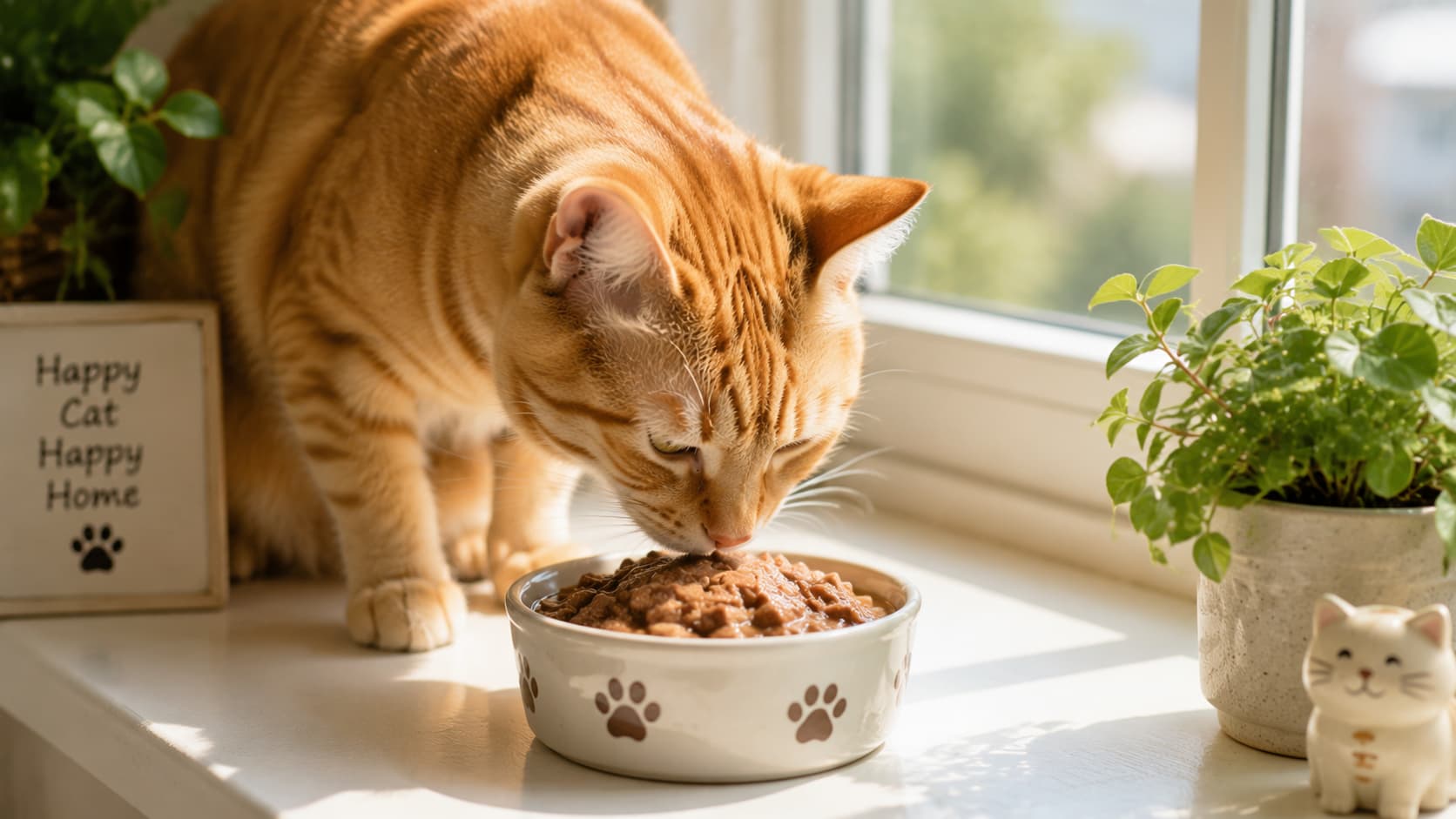
Monitoring and Adjusting Your Cat’s Diet
Regular monitoring helps determine whether your cat is receiving the right amount of food.
Important factors to track include:
- body weight;
- body condition score (BCS);
- appetite;
- activity level;
- changes in behavior.
A healthy cat generally has a visible waist when viewed from above and ribs that can be felt with light pressure but are not prominently visible.
The ideal body condition score for many cats is around 4–5 on a 9-point scale.
Signs that feeding amounts may need adjustment include:
- unexplained weight loss;
- excessive weight gain;
- reduced activity;
- sudden appetite changes.
Keeping a simple record of weight and feeding changes can help identify patterns over time.
When to Consult a Veterinarian
A veterinarian can provide guidance when a cat’s nutritional needs are affected by health conditions or major lifestyle changes.
Seek professional advice if your cat experiences:
- sudden weight loss or weight gain;
- significant appetite changes;
- vomiting or diarrhea;
- unusual lethargy;
- changes in drinking habits.
Veterinary guidance is especially important when changing diets for cats with medical conditions such as diabetes, kidney disease, or obesity.
Regular monitoring and appropriate adjustments can help maintain a healthy feeding routine throughout your cat’s life.


Just For You
Parenting
Understanding When Ectopic Pregnancy Symptoms Start A Comprehensive Guide
May 9, 2026

Pets
How to Crate Train a Puppy Safely
June 19, 2026

Tourism
Best Travel Destinations Japan A Practical Guide to Exploring Cities, Nature, and Culture
March 27, 2026

Shopping
Unlocking Value The Best Cheap Running Shoes That Don’t Skimp on Comfort
April 13, 2026
Recommended For You

Parenting
Balance Ball Pregnancy Exercises Safe Movements for Comfort, Strength, and Labor Preparation
March 24, 2026
Pets
Can I Feed Dogs Cat Food What Pet Owners Need to Know
May 2, 2026
Tourism
Best Travel Destinations Japan A Practical Guide to Exploring Cities, Nature, and Culture
March 27, 2026

Shopping
The Heart of Gifting Finding the Perfect Birthday Gift for Your Mom
April 18, 2026