Pets
How Often to Feed a Cat A Practical Guide for Every Life Stage
April 23, 2026
Discover how often to feed your cat at every life stage with expert tips and guidance on nutrition. Ensure optimal health for your feline friend!
Feeding frequency is a critical aspect of ensuring the health and well-being of our feline companions. Cats, like humans, have varying nutritional needs that can change based on their age, activity level, and overall health. Understanding how often to feed your cat can help establish a routine that supports their growth, energy levels, and digestive health. This guide aims to provide cat owners with comprehensive information on feeding frequency tailored to different life stages—from kittens to senior cats—while addressing common concerns and queries regarding nutrition and feeding habits. As you navigate through this guide, you'll learn about the nutritional requirements of each stage, how to create an effective feeding schedule, and the importance of timing in relation to their lifestyle. Armed with this knowledge, you can ensure that your beloved pet receives the appropriate amount of food at the right intervals for optimal health.
The Importance of Feeding Frequency for Cats
Understanding feline eating behavior is crucial for providing the best care. Unlike dogs, cats are natural grazers, often eating small amounts throughout the day rather than three large meals. This behavior is rooted in their evolutionary history as hunters, where they would consume prey as their energy requirement fluctuated. Consequently, a cat’s energy needs can vary significantly throughout the day, influenced by activity levels and metabolic rate. Feeding them too infrequently can lead to overeating when they do get food, potentially resulting in obesity and various health problems.
Additionally, meal timing plays a vital role in establishing a predictable routine for your cat, which is essential for their overall behavioral health. Cats thrive on consistency, and a regular feeding schedule can help reduce anxiety and create a sense of stability in their lives. By recognizing how feeding frequency impacts their energy levels, behavior, and digestive health, cat owners can tailor their feeding routine to best suit their feline’s needs.
How Often to Feed a Cat at Different Ages
Feeding Kittens
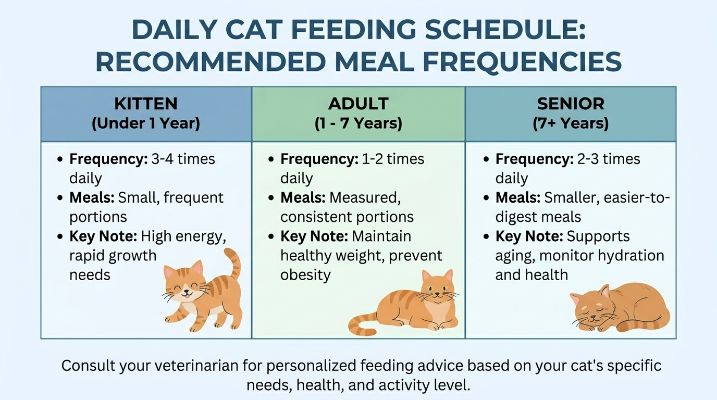
Kittens experience a rapid growth phase during their first few months, necessitating frequent feedings. They typically require 4–5 meals a day to ensure they receive adequate nutrition for this critical developmental stage. As they approach six months, you can gradually transition them to fewer meals, ideally settling into a routine of three meals per day. This shift not only accommodates their growing independence but also helps establish a consistent routine that can carry into adulthood, ensuring they maintain a balanced intake of nutrients essential for their overall health.
Feeding Adult Cats
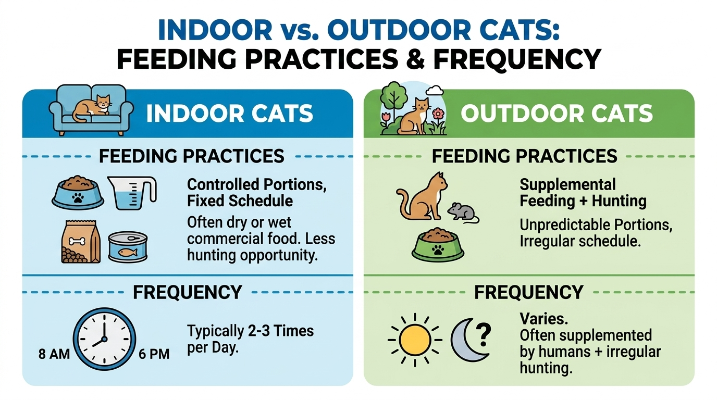
Adult cats generally thrive on a feeding schedule of 1 to 3 meals daily. While some owners prefer to feed their cats one large meal, this can lead to overconsumption and obesity, particularly for indoor cats, which are generally less active. Conversely, multiple smaller meals can help stabilize their energy levels and prevent hunger-related behaviors, catering to a cat's natural grazing instincts. Moreover, factors such as whether the cat is indoor or outdoor also play a critical role in determining the best feeding frequency, as outdoor cats may burn more calories and hence require more frequent feeding.
Feeding Senior Cats
As cats age, they may experience various health challenges, such as dental issues, kidney disease, or diabetes, all of which can affect their appetite and dietary needs. Senior cats may eat less due to these age-related health changes, necessitating adjustments in their feeding routine. It’s crucial to consult with a veterinarian when considering dietary changes, as they can provide guidance on nutrient needs and recommend specific food types that support health while ensuring adequate caloric intake. Tailoring the diet to these changes is vital for maintaining their quality of life as they enter their golden years.
Free Feeding vs Scheduled Feeding
What Is Free Feeding?
Free feeding is a method where cat owners leave a bowl of dry food accessible to their cats throughout the day. This allows cats to eat at their convenience, promoting independence in mealtimes and catering to their natural foraging instincts.
Benefits of Free Feeding
One significant advantage of free feeding is the reduction of stress for certain cats. With constant access to food, cats can eat when they feel hungry, leading to a more relaxed environment, especially for those who struggle with anxiety associated with mealtime restrictions.
Potential Drawbacks
However, free feeding carries potential risks, particularly concerning obesity and overeating. Some cats may consume more food than necessary, leading to weight gain and health issues, which is especially concerning for breeds predisposed to obesity.
What Is Scheduled Feeding?
Scheduled feeding is a more structured approach where meals are provided at specific times throughout the day. Owners establish a routine by offering set portions of food, allowing for better control over the cat’s dietary intake.
Benefits of Scheduled Meals
The benefits of scheduled meals are numerous, including regulated portion sizes and a consistent daily routine. This structured feeding helps monitor food intake, promoting a healthy weight and ensuring cats receive necessary nutrients without excess.
Which Approach Works Best?
In determining which feeding method works best, it’s crucial for owners to consider their individual cat's needs and personality. Factors such as age, activity level, and weight can influence the effectiveness of either approach. Consulting a veterinarian can help tailor feeding strategies appropriately.
Factors That Influence Feeding Frequency for Cats
Understanding how often to feed your cat requires consideration of several key factors:
Age
A cat's life stage significantly influences its nutritional needs. Kittens require frequent meals due to their rapid growth and higher energy levels, typically needing four meals a day. As they transition to adulthood, the frequency can decrease to twice daily. Senior cats may also benefit from smaller, more digestible meals as their metabolism slows down and dental issues may arise.
Weight and Body Condition
Cats that are overweight may require meal restrictions or controlled portions to promote weight loss, while underweight cats often need to increase their feeding frequency and incorporate nutritious options to aid in weight gain. Monitoring their body condition score helps determine the necessary adjustments.
Activity Level
The physical activity of a cat plays a critical role in determining its meal size and frequency. Active cats, such as those that play vigorously or engage in outdoor exploration, may need more frequent, larger meals compared to sedentary cats, who require less fuel.
Indoor vs Outdoor Lifestyle
Indoor cats typically have different dietary needs compared to outdoor cats. The latter may require more calories due to increased energy expenditure. Conversely, indoor cats might be more prone to obesity and therefore could benefit from scheduled feeding instead of free access.
Household Environment
In multi-pet households, feeding routines may also be affected by competition or territorial behaviors. Cats may require separate feeding spaces or scheduled times to minimize stress and ensure all pets receive adequate nutrition.
Medical Considerations
Chronic medical conditions such as diabetes or kidney disease can radically alter a cat’s feeding habits. Owners should consult with a veterinarian to develop an appropriate feeding plan that addresses these health challenges and ensures the cat's well-being.
Dry Food vs Wet Food Feeding Schedules
Feeding Dry Food
Dry cat food, or kibble, is often favored for its convenience and longer shelf life. One benefit is that it can aid in maintaining dental health by reducing tartar buildup, as the crunchy texture encourages chewing. Additionally, dry food typically contains fewer calories than wet food, which may help prevent obesity in cats. However, a significant drawback is that dry food has a lower moisture content, which may lead to dehydration, especially if a cat does not drink enough water. Furthermore, some cats may not find dry food as palatable, leading to reduced food intake and potential nutritional deficiencies.
Feeding Wet Food
Wet cat food, commonly available in cans or pouches, is known for its high moisture content, making it an excellent choice for hydration, especially in cats prone to urinary issues. The palatability of wet food often entices finicky eaters, enhancing overall food consumption. However, wet food can be more expensive than dry, requiring proper storage once opened to avoid spoilage. Additionally, its higher calorie density means portion control is crucial to prevent obesity. Owners may also need to consider the additional time required for feeding and cleaning up after meals compared to dry food.
Combining Wet and Dry Food
Offering a combination of wet and dry food can be an optimal approach to feeding a cat. This blend allows cat owners to take advantage of the benefits of both diets—enhancing hydration and palatability while also supporting dental health. Furthermore, varying textures and flavors can prevent mealtime boredom, keeping cats engaged and satisfied. Such a combination ensures a balanced nutrient profile and allows for flexibility in managing portion sizes, thereby catering to each cat’s individual dietary needs while also promoting overall well-being.
Signs Your Cat's Feeding Routine May Need Adjustment
Cats can exhibit a range of behaviors that signal a need for changes to their feeding routine. One of the most significant indicators is a change in appetite, whether that be an increase or a decrease. If your cat suddenly devours food ravenously or, conversely, turns its nose up at meals it once enjoyed, this could be a sign of an underlying health issue or a shift in its dietary needs.
Additionally, it's crucial to monitor your cat's weight closely. Unexplained weight gain or loss can be alarming and suggest a problem with their nutrition or overall health. Regular weigh-ins can help catch these changes early.
Food-seeking behavior also provides valuable clues. If your cat is constantly meowing or begging for food outside their usual feeding times, it may indicate discomfort or insufficient nourishment. Finally, keeping an eye on your cat's activity level can offer insights into their well-being; a drop in energy might suggest dietary adjustments or health concerns.
By staying vigilant about these signs, you can ensure that your cat maintains a healthy feeding routine suited to its changing needs.
Creating a Healthy Cat Feeding Schedule
Consistency Matters
Establishing regular feeding times is crucial for your cat’s well-being. Cats thrive on routine, as it helps modulate their metabolism and reduces anxiety. Aim to feed your cat at the same times each day, ensuring they know when to expect meals, which can foster good eating habits and stability in their daily routine.
Portion Control
Managing portion sizes is essential for preventing obesity and ensuring your cat receives the right nutrients. Refer to the feeding guidelines provided by your veterinarian based on your cat’s age, weight, and activity level. This practice not only aids in maintaining a healthy weight but also promotes optimal health throughout their life stages.
Monitoring Body Condition
Regular assessments of your cat's body condition are necessary for a healthy feeding regimen. Keep an eye on weight changes and adjust feeding amounts accordingly. Routine vet check-ups can help assess your cat’s health and ensure they remain at an ideal weight, which is important for their longevity and happiness.
Using Automatic Feeders
Automatic feeders can significantly simplify your cat’s feeding schedule, especially for busy owners. They ensure consistent portion sizes and timely meals, helping to keep your cat’s diet on track. These devices can also prevent overeating since many allow for controlled feeding intervals, promoting a healthier lifestyle for your feline friend.
Final Thoughts on How Often to Feed a Cat
Crafting an individualized feeding plan for your cat is vital to ensuring their overall health and well-being. Each feline is unique; their dietary needs can vary greatly based on age, activity level, health status, and personal preferences. It is essential to maintain an ongoing dialogue with your veterinarian, who can help shape a feeding strategy that aligns with your cat's specific requirements. Moreover, being observant of any changes in your cat’s eating habits or weight can be a crucial indicator that a feeding adjustment may be necessary. Regular check-ins with veterinary professionals are invaluable, providing you with insights on any emerging health issues and ensuring that your feline friend remains in optimal condition. As you continue to adapt their diet according to their life stage and needs, remember that an attentive approach not only fosters health but can also strengthen the bond between you and your pet.


Just For You

Parenting
A Comprehensive Guide to Caring for Newborns Essential Tips for First-Time Parents
April 3, 2026

Pets
Clicker Training for Cats A Beginner's Guide to Positive Reinforcement
April 15, 2026

Tourism
Exploring Together The Ultimate Guide to Family Adventure Travel
April 21, 2026

Shopping
Personalized Family Gifts That Strengthen Meaningful Connections at Home
April 13, 2026
Recommended For You

Parenting
Circumcision Care for Newborns A Practical Guide for Parents
April 25, 2026

Pets
Can Dogs Eat Cat Food What Pet Owners Should Know
June 3, 2026

Tourism
Best Travel Destinations for Couples Thoughtful Places to Share Meaningful Moments
April 3, 2026

Shopping
Finding the Perfect Fit The Best Running Shoes for Wide Feet That Blend Comfort and Performance
March 21, 2026