Pets
How to Train a Cat With Positive Reinforcement
June 6, 2026
Learn how to train your cat using positive reinforcement techniques. Discover effective strategies for a happier, well-adjusted feline companion!
Cats can learn new behaviors through positive reinforcement training, a method that rewards desired actions instead of punishing unwanted ones. Although cats are often considered independent animals, they can respond well to consistent training when the reward, timing, and approach match their natural behaviors.
Positive reinforcement may include treats, praise, play, or other rewards that encourage a cat to repeat a specific behavior. This approach can be used for teaching basic commands, improving handling tolerance, reducing unwanted habits, and building better communication between cats and their owners.
Successful cat training requires patience, consistency, and an understanding of feline behavior. This guide explains how positive reinforcement works, which techniques to use, common mistakes to avoid, and how to create an effective training routine.
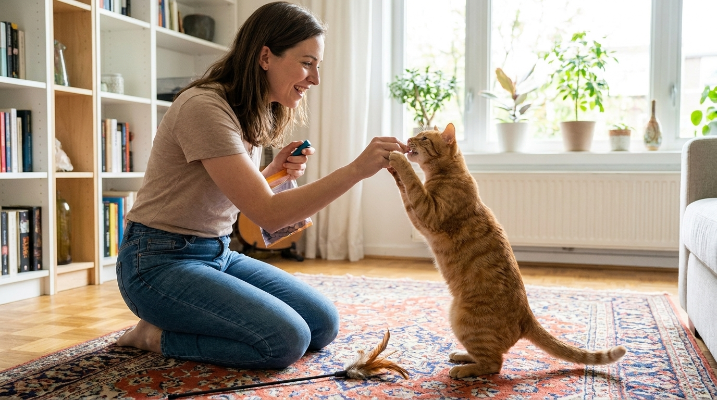
Cats Can Be Trained: Understanding the Common Misconception
Many people believe cats cannot be trained because they are independent and less focused on pleasing humans than some other pets. However, cats are capable of learning through reward-based methods.
Cats naturally learn through associations. When a behavior leads to a positive outcome, such as receiving a treat or playtime, they are more likely to repeat that behavior.
Positive reinforcement training can be used to teach cats behaviors such as:
- responding to their name;
- entering a carrier;
- sitting on cue;
- accepting grooming or handling;
- using appropriate scratching areas.
The key is understanding what motivates your cat and creating training sessions that are short, clear, and rewarding.
How Positive Reinforcement Works
Positive reinforcement involves rewarding a cat immediately after a desired behavior occurs.
The basic process is:
- Cat performs a desired action.
- Owner provides a reward.
- Cat associates the behavior with a positive result.
- The behavior becomes more likely to happen again.
Timing is especially important. The reward should happen within a few seconds of the behavior so the cat understands what action caused the reward.
Using Clickers and Verbal Markers
For example:
- Cat sits.
- Owner clicks immediately.
- Cat receives a treat.
Over time, the click becomes a signal that tells the cat a reward is coming.
Verbal markers such as “yes” or “good” can also work when used consistently.
Choose a Training Goal, Reward, and Marker
Before starting training, choose one specific behavior instead of trying to teach multiple skills at once.
Good beginner goals include:
- coming when called;
- sitting on cue;
- entering a carrier;
- allowing gentle handling.
Choosing Rewards
Different cats respond to different rewards.
Common options include:
- small treats;
- favorite toys;
- play sessions;
- attention.
The best reward is something your cat finds valuable and can receive quickly.
Adding a Marker
A marker helps your cat understand exactly which behavior earned the reward.
Use a clicker or a consistent word immediately after the correct action.
Build Behaviors in Small Steps
Cats usually learn better when behaviors are broken into smaller steps.
Training sessions should be:
- short;
- consistent;
- focused on one behavior.
Many cats respond well to sessions lasting around 5–10 minutes.
Example: Teaching Sit
A simple approach:
- Hold a treat near your cat’s nose.
- Move the treat upward slowly.
- When your cat naturally lowers into a sitting position, mark the behavior.
- Give the reward.
Repeat until the behavior becomes consistent.
Example: Carrier Training
Instead of forcing a cat into a carrier:
- Leave the carrier open at home.
- Place treats or toys nearby.
- Reward your cat for approaching or entering.
- Gradually increase comfort with longer periods inside.
This helps reduce fear associated with travel.
Add Cues and Practice in Different Environments
Once your cat consistently performs a behavior, you can introduce a verbal cue.
For example:
- Say “sit” as your cat begins sitting.
- Reward immediately afterward.
Over time, your cat learns the connection between the cue and the action.
Practice in Different Locations
Cats may not automatically understand that a behavior applies everywhere.
Practice gradually in:
- different rooms;
- quieter areas;
- slightly more distracting environments.
Avoid making the environment too challenging too quickly.
Useful Behaviors to Teach Your Cat First
Some behaviors are especially helpful for daily care.
Responding to Their Name
Teaching your cat to look toward you when called can improve communication and make it easier to get their attention.
Sitting on Cue
A simple sit behavior can help create calmer interactions during feeding or handling.
Entering a Carrier
Carrier training can make veterinary visits and transportation less stressful.
Accepting Gentle Handling
Helping cats become comfortable with:
- touching paws;
- checking ears;
- brushing;
- being picked up;
can make grooming and healthcare easier.
Common Cat Training Mistakes and How to Fix Them
Using Punishment
Punishment may create fear and does not clearly teach the desired behavior.
Instead, focus on rewarding behaviors you want to encourage.
Training for Too Long
Long sessions may cause cats to lose interest.
Short, frequent sessions usually work better.
Inconsistent Rewards
Changing rules or rewards frequently can confuse cats.
Use consistent cues and rewards during training.
Expecting Immediate Results
Cats learn at different speeds. Progress may require repetition and patience.
When to Seek Veterinary or Behavior Support
Some behavior changes may be caused by medical issues rather than training problems.
Consult a veterinarian if your cat suddenly shows:
- aggression;
- litter box problems;
- appetite changes;
- excessive hiding;
- unusual vocalization;
- signs of pain.
A veterinarian or certified animal behavior professional can help identify whether the issue is medical, environmental, or behavioral.
Building Better Communication Through Training
Positive reinforcement training helps cats learn behaviors while creating clearer communication between pets and owners.
The most effective approach combines:
- patience;
- consistency;
- appropriate rewards;
- understanding of feline behavior.
By using reward-based methods and respecting your cat’s natural tendencies, you can teach useful behaviors while making everyday interactions easier and more predictable.
Just For You
Parenting
Can Babies Sleep on Their Stomach Safety Rules and Age Guidelines
May 18, 2026
Pets
How Often to Feed a Cat A Practical Guide for Every Life Stage
April 23, 2026

Tourism
Tropical Honeymoon Destinations Romantic Islands and Beach Escapes for Couples
April 7, 2026

Shopping
Meaningful Choices The Ultimate Guide to Personalized Baby Gifts
April 21, 2026
Recommended For You

Parenting
Baby Sleep Regression Stages, Causes, and How to Handle It
May 25, 2026

Pets
Can Dogs Eat Cat Food What Pet Owners Should Know
June 3, 2026

Tourism
Affordable Honeymoon Destinations Romantic Trips That Don’t Break the Budget
April 9, 2026

Shopping
Personalized Gifts for Grandma That Feel Thoughtful and Truly Meaningful
April 13, 2026