Pets
Can Dogs Eat Cat Food What Pet Owners Should Know
June 3, 2026
Can dogs eat cat food? Discover the risks and nutritional differences between dog and cat diets. Ensure your pet's health with proper feeding practices.
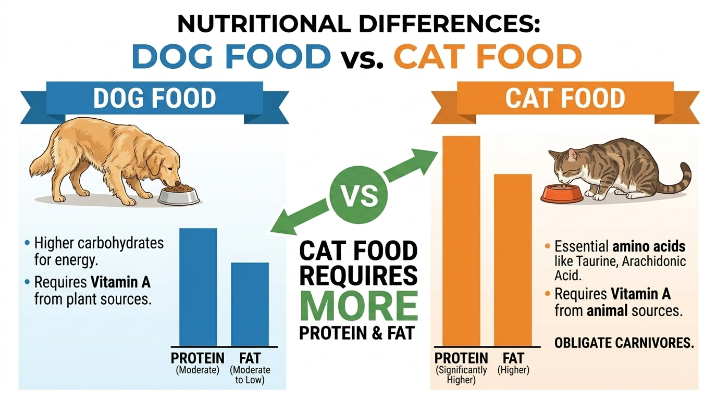
Dogs can eat cat food occasionally, but cat food should not replace a complete and balanced diet made specifically for dogs. Cat food is formulated to meet the nutritional needs of cats, which usually means higher levels of protein, fat, and certain nutrients compared with dog food.
A small accidental bite of cat food is unlikely to cause serious problems for most healthy dogs. However, regularly feeding cat food to dogs may contribute to excessive calorie intake, digestive issues, weight gain, and nutritional imbalances over time.
Understanding the differences between dog and cat nutrition can help pet owners make safer feeding choices, especially in homes with multiple pets.
1. Can Dogs Eat Cat Food?
Dogs are omnivores, meaning they can obtain nutrients from both animal and plant-based ingredients. Cats, however, are obligate carnivores and require higher levels of certain nutrients that come primarily from animal sources.
Because cat food is designed around feline nutritional needs, it often contains:
- higher protein levels;
- higher fat content;
- different vitamin and mineral balances.
These differences make cat food unsuitable as a regular meal replacement for dogs.
2. Why Dog and Cat Foods Are Different
Dog and cat foods are formulated differently because the two species have different biological requirements.
Dogs
Dogs generally require a balanced diet containing:
- protein;
- fats;
- carbohydrates;
- vitamins and minerals.
Their digestive systems allow them to use nutrients from a wider variety of ingredients.
Cats
Cats require higher levels of animal-based nutrients, including:
- taurine;
- arachidonic acid;
- specific amino acids.
Cat food is designed to provide these nutrients in amounts appropriate for feline health.
Because dogs and cats have different nutritional needs, feeding one species’ food to the other on a regular basis may not provide the correct balance of nutrients.
3. One Accidental Bite vs Regular Feeding
The effects of cat food depend largely on how often and how much a dog consumes.
Occasional Consumption
If a healthy dog eats a small amount of cat food, it will usually not cause serious problems. Some dogs may experience mild digestive upset, but many show no symptoms.
Regular Consumption
Feeding cat food regularly can create problems because it is typically more calorie-dense than dog food.
Possible concerns include:
- weight gain;
- digestive upset;
- excessive fat intake;
- difficulty maintaining a balanced diet.
The risk is higher when cat food replaces a dog’s normal meals.
4. Possible Short- and Long-Term Effects
Short-Term Effects
After eating cat food, some dogs may experience:
- vomiting;
- diarrhea;
- gas;
- stomach discomfort.
These symptoms are usually temporary, especially after a small amount.
Long-Term Effects
Regularly eating cat food may increase the risk of:
- excess calorie intake;
- obesity;
- poor nutrient balance;
- worsening of certain health conditions.
Dogs that already have digestive problems, weight concerns, or metabolic conditions may be more sensitive to dietary changes.
5. What to Do If Your Dog Eats Cat Food
If your dog gets into cat food, consider the following steps:
Check How Much Was Eaten
A few bites are usually less concerning than consuming an entire bowl or bag of cat food.
Consider Your Dog’s Size and Health
Small dogs, senior dogs, and dogs with existing health conditions may be more affected by dietary changes.
Monitor for Symptoms
Watch for:
- vomiting;
- diarrhea;
- unusual tiredness;
- loss of appetite;
- abdominal discomfort.
Contact a Veterinarian When Needed
If your dog eats a large amount of cat food or develops concerning symptoms, contact your veterinarian for guidance.
6. Dogs That Need Extra Caution
Some dogs may require more careful monitoring after eating cat food.
Extra caution is recommended for dogs with:
- pancreatitis history;
- obesity concerns;
- diabetes;
- kidney disease;
- food sensitivities.
Because cat food is often higher in fat and calories, it may not be suitable for dogs with conditions requiring controlled diets.
7. How to Prevent Dogs From Eating Cat Food
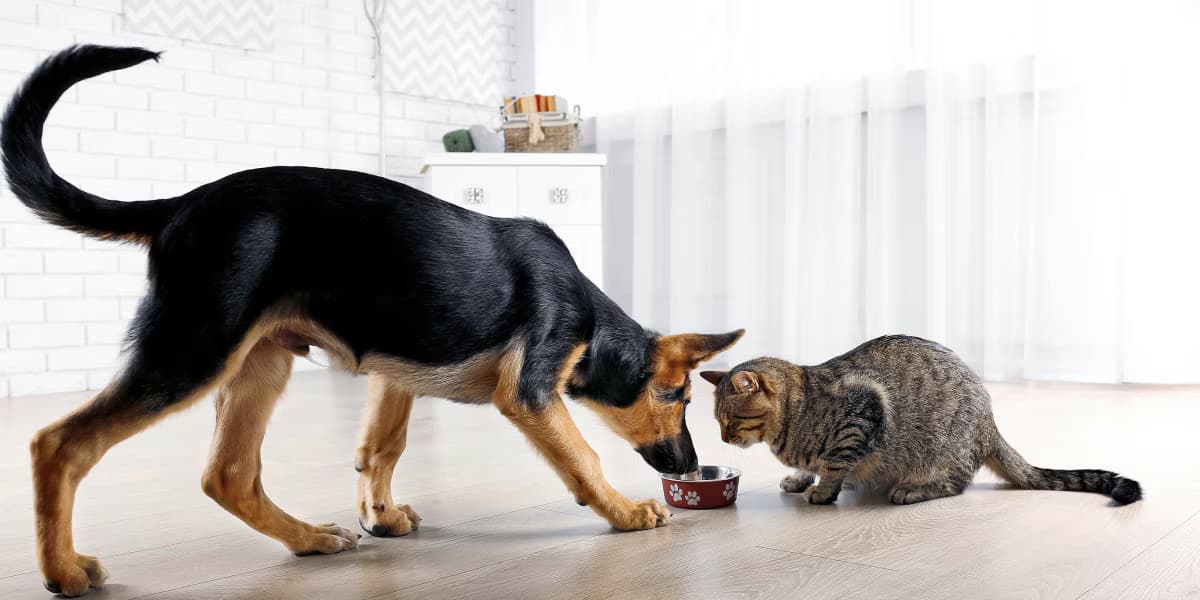
Multi-pet households can reduce accidental feeding with a few simple strategies.
Create Separate Feeding Areas
Feed cats and dogs in different locations to reduce competition and access.
Use Physical Barriers
Baby gates, separate rooms, or elevated feeding areas can help keep dog food and cat food separate.
Establish Feeding Routines
Scheduled meals make it easier to monitor what each pet eats.
Store Food Properly
Keep bags and containers sealed and stored where pets cannot access them.
8. When to Contact a Veterinarian
Most healthy dogs do not experience serious problems after eating a small amount of cat food. However, veterinary advice may be appropriate if your dog shows:
- repeated vomiting;
- persistent diarrhea;
- unusual lethargy;
- loss of appetite;
- abdominal swelling or discomfort;
- changes in behavior.
Dogs with existing health conditions should receive professional guidance sooner, especially after consuming large amounts of cat food.
Keeping Dog and Cat Diets Separate
Although dogs may occasionally eat cat food without immediate problems, cat food should not become a regular part of a dog’s diet. Dogs and cats have different nutritional requirements, and each species benefits most from food formulated specifically for their needs.
Providing appropriate food, monitoring eating habits, and preventing cross-feeding helps support better health for both dogs and cats.

Just For You
Parenting
Is Diarrhea Normal During Pregnancy Causes and When to Worry
May 23, 2026
Pets
How Much Dry Food to Feed a Cat
June 21, 2026

Tourism
Budget Travel How to Travel the World on a Budget
May 6, 2026

Shopping
Personalized Family Gifts That Strengthen Meaningful Connections at Home
April 13, 2026
Recommended For You
Parenting
Can Babies Sleep on Their Stomach Safety Rules and Age Guidelines
May 18, 2026
Pets
How Much Wet Food to Feed a Cat
June 21, 2026
Tourism
Budget Travel How to Travel the World on a Budget
May 6, 2026
Shopping
Personalized Family Gifts That Strengthen Meaningful Connections at Home
April 13, 2026