Pets
How Long Does It Take to Potty Train a Puppy
June 8, 2026
Wondering how long it takes to potty train a puppy? Discover a realistic timeline and essential tips for effective training that builds trust and habits.
Potty training is one of the first major learning processes a puppy experiences after joining a new household. Beyond simply teaching a puppy where to eliminate, successful house training helps establish daily routines, improve communication between the owner and the dog, and create expectations that support better behavior as the puppy grows.
One of the most common questions new puppy owners ask is, “How long does it take to potty train a puppy?” The answer varies significantly because every puppy develops at a different pace. Some puppies begin understanding the basic routine within a few days or weeks, while others may need several months before they consistently avoid accidents indoors.
Factors such as age, breed, previous experiences, bladder development, household routine, and the consistency of training all influence how quickly a puppy becomes reliable. Rather than focusing only on a specific timeline, owners should pay attention to gradual improvement, recognize important milestones, and maintain a consistent approach throughout the process.
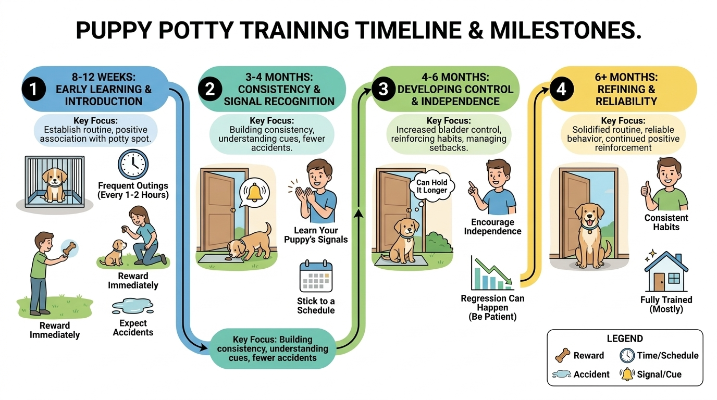
A Realistic Puppy Potty Training Timeline
There is no universal timeline that applies to every puppy, but most puppies require several weeks to several months of consistent training before they become dependable with their bathroom habits. Younger puppies often need more time because they have limited bladder control and are still learning how to recognize their own physical signals.
During the early stages, progress may appear inconsistent. A puppy may successfully go outside several times in a row and then suddenly have an accident indoors. These setbacks are normal because puppies are still developing control and learning how their environment works.
A structured routine can significantly improve the training process. Taking a puppy outside after waking, eating, drinking, playing, and resting helps create predictable opportunities for success. Over time, these repeated experiences allow puppies to understand the connection between certain daily activities and bathroom breaks.
Although breed differences can influence learning speed, consistency usually plays a larger role than breed alone. A puppy that receives regular opportunities, clear guidance, and positive reinforcement is generally more likely to develop reliable habits.
What Does “Potty Trained” Actually Mean?
A potty-trained puppy is not simply a dog that has gone several days without an accident. Reliable potty training means the puppy understands where elimination should happen, can control their bladder appropriately for their age, and begins communicating their needs to their owner.
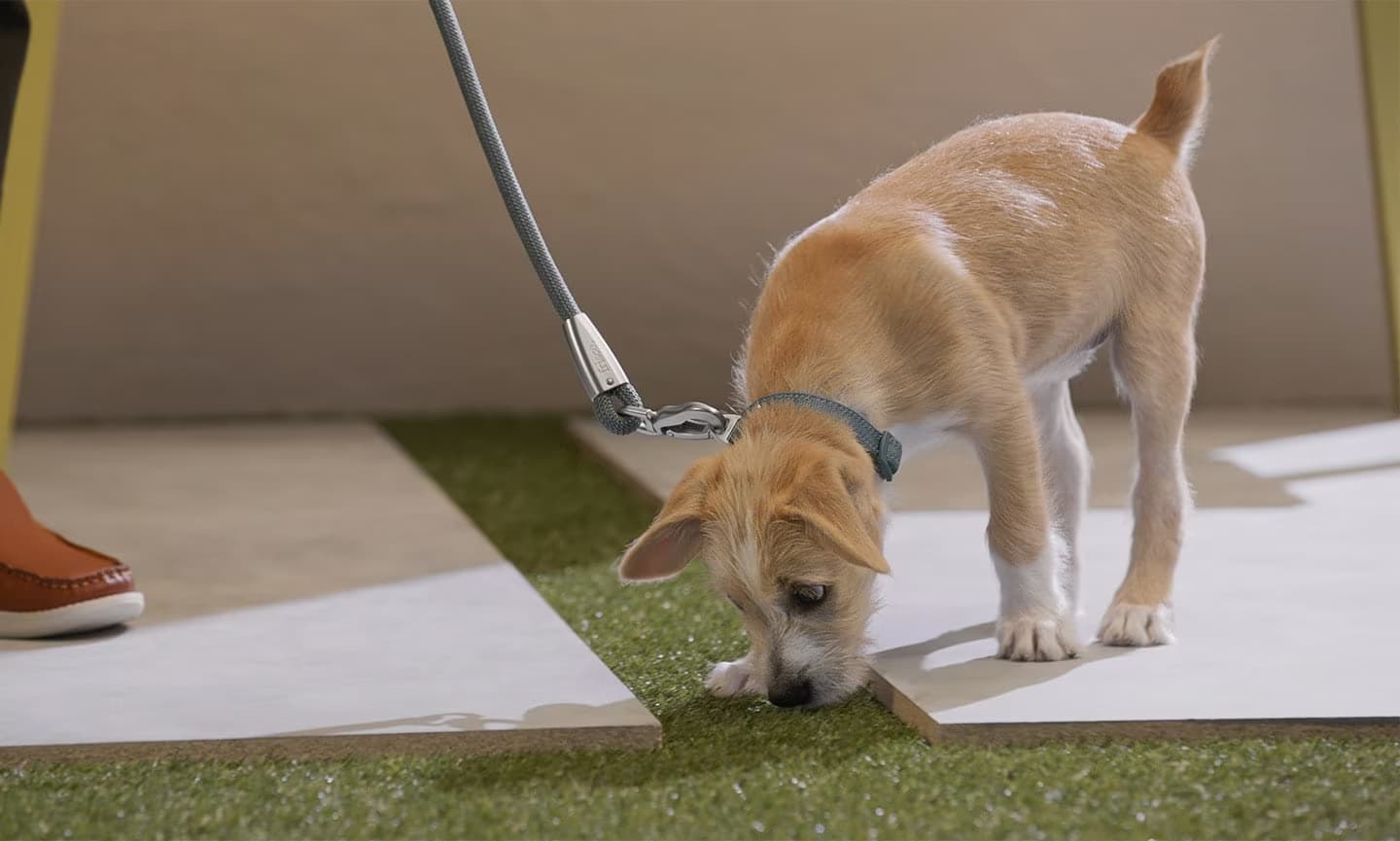
Many puppies show signs when they need to go outside, such as waiting near the door, becoming restless, sniffing the floor, or looking toward their owner. However, some dogs may never develop an obvious signal, so owners should continue maintaining a consistent schedule rather than relying only on communication cues.
It is also important to understand that potty training is a gradual process. A young puppy may understand that outdoor elimination is preferred but still have occasional accidents due to excitement, distractions, illness, or simply limited bladder control. These situations do not necessarily mean training has failed; instead, they indicate that the puppy may need continued supervision and reinforcement.
Important Milestones During Puppy Potty Training
Potty training progress is usually measured through a series of small improvements rather than one single moment when a puppy becomes fully trained.
One of the earliest milestones occurs when a puppy successfully eliminates outdoors for the first time. This shows that the puppy is beginning to understand the connection between the outdoor area and bathroom behavior. Rewarding this success immediately helps strengthen the association.
Another important stage is when the puppy begins showing awareness before needing to go. This may include walking toward the door, becoming restless, or seeking attention from the owner. Responding quickly to these signals helps reinforce communication and encourages the puppy to continue expressing their needs.
Eventually, a well-trained puppy becomes more predictable with bathroom timing and experiences fewer indoor accidents. At this stage, owners can gradually increase freedom around the home while continuing to monitor behavior.
Factors That Affect How Long Potty Training Takes
The time required to potty train a puppy depends on several factors, and understanding these influences can help owners create realistic expectations.
Age is one of the most important factors. Younger puppies naturally have less bladder control, which means they require more frequent bathroom opportunities and closer supervision. As puppies mature, their ability to hold their bladder improves, making training easier.
Breed and individual temperament may also affect the learning process. Some puppies are naturally more attentive to routines and respond quickly to training, while others may require additional repetition and patience. However, breed should not determine expectations entirely, as individual personality and environment often play significant roles.
Previous experiences can also influence progress. A puppy coming from a stable environment may adjust quickly, while a puppy from a shelter or unfamiliar background may need additional time to develop confidence and trust.
The owner’s consistency is another major factor. Puppies learn through repetition, so irregular schedules, missed signals, or changing expectations can slow progress. A predictable routine combined with positive reinforcement usually produces better results than inconsistent training methods.
Knowing When Your Puppy Is Ready for More Freedom
Increasing a puppy’s freedom around the home should happen gradually rather than immediately after a short period without accidents. A puppy is generally ready for more independence when they consistently follow their bathroom routine, show fewer accidents, and demonstrate better awareness of where they should eliminate.
Start by allowing access to additional areas for short periods while continuing supervision. If the puppy maintains good habits, freedom can slowly increase over time. If accidents occur again, temporarily returning to a smaller supervised area can help reinforce previous training.
Age can provide a general guideline, but behavior is a more reliable indicator. Some puppies become trustworthy earlier, while others require additional time before they can manage more freedom successfully.
Why Potty Training Setbacks Happen
Even puppies that appear fully trained can experience occasional setbacks. Regression does not always mean the puppy has forgotten their training; instead, it often indicates that something has changed in their environment or routine.
Common causes include moving to a new home, changes in feeding schedules, new pets, changes in family routines, or stressful experiences. Puppies may also experience temporary setbacks during developmental stages when their behavior and confidence change.
When regression occurs, owners should return to the basics rather than reacting negatively. Increasing supervision, maintaining a predictable schedule, and reinforcing successful outdoor elimination can help restore previous progress.
Patience is important because setbacks are often temporary and can be resolved with consistent guidance.
What to Do When Potty Training Progress Slows
If potty training seems to stop improving, reviewing the foundation of the routine is usually the best first step.
Owners should consider whether the puppy is receiving enough bathroom opportunities, especially after meals, naps, and play sessions. It is also helpful to review whether early warning signs are being missed or whether the puppy has been given too much freedom too quickly.
Returning to a structured routine can often improve consistency. Rewarding successful outdoor elimination and limiting access to areas where accidents frequently occur can help rebuild reliable habits.
Training should remain positive throughout the process. Punishment may create fear and confusion, while encouragement and repetition help puppies understand the desired behavior.
When Potty Accidents May Indicate a Medical Problem
Although most puppy accidents are related to training, sudden or unusual changes in bathroom habits may sometimes indicate a health issue.
Owners should consult a veterinarian if a puppy shows signs such as difficulty urinating, frequent attempts to urinate without producing much urine, blood in urine, excessive thirst, unusual tiredness, vomiting, or persistent diarrhea.
Medical issues such as urinary tract problems or digestive disorders can interfere with normal potty habits. Identifying health concerns early ensures that training challenges are not mistaken for behavioral problems.
Helping Your Puppy Develop Reliable Potty Habits
Potty training a puppy requires patience, consistency, and realistic expectations. While some puppies may learn quickly, others need additional time and repetition before they become fully reliable.
The most effective approach combines a predictable routine, close observation, positive reinforcement, and gradual increases in freedom. Instead of focusing only on how long the process takes, owners should pay attention to progress, celebrate improvements, and adjust their approach based on their puppy’s individual needs.
With consistent guidance and a supportive training environment, puppies can develop reliable bathroom habits while building trust and confidence with their owners.

Just For You
Parenting
Balance Ball Pregnancy Exercises Safe Movements for Comfort, Strength, and Labor Preparation
March 24, 2026
Pets
Cat Feeder Guide Types, Features, and How to Choose the Right Feeding Solution
April 7, 2026

Tourism
Exploring Together The Ultimate Guide to Family Adventure Travel
April 21, 2026

Shopping
The Best Adidas Running Shoes Finding the Perfect Balance for Every Runner
April 11, 2026
Recommended For You

Parenting
What Are the Best Baby Sleep Sacks Safety, Types, and Buying Guide
May 16, 2026
Pets
How to Train Your Cat to Use Kitty Litter A Simple Guide for New Cat Owners
April 10, 2026

Tourism
Best Places to Travel Solo Safe and Inspiring Destinations
April 27, 2026

Shopping
Personalized Family Gifts That Strengthen Meaningful Connections at Home
April 13, 2026