Parenting
The Significance of Sleep Training for Parents and Babies
April 28, 2026
Discover the importance of sleep training for parents and babies with expert guidance on navigating sleep habits, readiness signs, and effective techniques.
Sleep training is a pivotal journey for both parents and their babies, often characterized by a whirlwind of questions and emotions. Many new parents find themselves wondering when to initiate this process, grappling with sleepless nights, and seeking reliable guidance to foster healthy sleep habits. It's vital to recognize that each baby is unique, with their own readiness timeline for sleep training. While some infants may exhibit readiness as early as four months, others may require additional time to develop. Attuning to your baby’s signals and understanding your family's dynamics are crucial in this journey. As we explore this subject in depth, remember that flexibility and patience are your best allies, shaping a positive sleep training experience tailored to your child's individual needs.
Understanding What Sleep Training Really Means
Why Sleep Training is Not One Single Method
When it comes to sleep training, there is no universally applicable method that works for every baby and family. Various techniques have gained traction in recent years, each catering to different parenting styles and child temperaments. The Ferber method, often referred to as "graduated extinction," allows for a baby to cry for progressively longer intervals before the parents intervene. This approach may work well for some families who feel comfortable with a little cry-time in exchange for longer sleep periods. Conversely, the no-tears method emphasizes soothing the baby to sleep without allowing any crying, appealing to parents who favor a gentler approach.
Finding the right method is paramount and must align with both family values and the baby’s temperament. For example, a spirited child may not respond well to strict methods, necessitating a more relaxed approach instead. Ultimately, the best method is unique to each family, influenced by beliefs, comfort levels, and the specific requirements of their child. Parents are encouraged to explore various options to select a method that honors their parenting philosophy and promotes their child’s well-being.
What “Readiness” Actually Looks Like in Babies
Readiness for sleep training varies significantly among babies and is closely tied to their developmental stages. Generally, indicators of readiness may encompass the ability to self-soothe, consistent sleep/wake patterns, and an age of around six months or older. At this age, babies often demonstrate neurodevelopmental maturation, setting the groundwork for healthier sleep habits.
Parents play a crucial role in recognizing their child's cues. Signs such as rubbing eyes, displaying fussiness, or successfully extending wake times can all signal that a baby is ready for sleep training. Being attentive to these signs is essential; comprehending a child’s distinct rhythm can facilitate a smoother transition to independent sleep, ultimately benefiting the entire family.
When to Start Sleep Training a Baby by Age
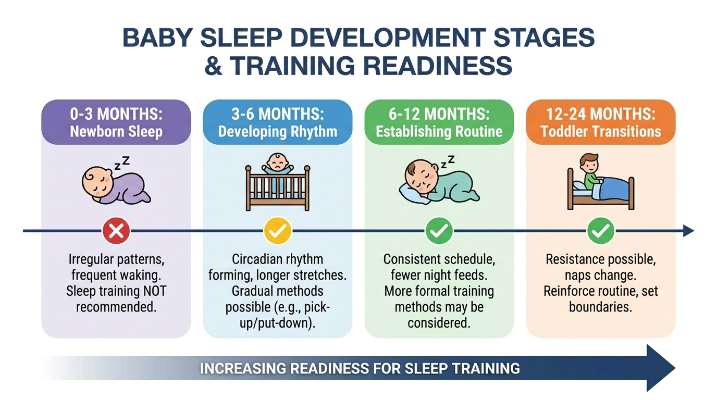
Newborn Stage (0–3 Months): What to Expect
Newborns, typically aged 0 to 3 months, reveal distinct sleep patterns characterized by short cycles lasting about 50-60 minutes, leading to frequent awakenings. It is common for parents to experience their babies waking every two to three hours for feedings and reassurance, owing to their small stomachs and pressing need for nourishment. Therefore, sleep training is generally discouraged at this stage, as infants are still acclimating to life outside the womb, and their biological rhythms are still forming. Cultivating an understanding of irregular sleep expectations can alleviate parental anxiety, allowing them to savor these early moments and strengthen their bond with their new arrival.
4–6 Months: The Most Commonly Recommended Window
Research confirms that the age range of 4 to 6 months is often the optimal period for many families to consider initiating sleep training. During this interval, babies become increasingly capable of self-soothing and show notable signs of developmental readiness, including greater sleep consolidation. Experts refer to studies that highlight critical milestones around this age—such as solid growth and increased interest in developmental activities—as indicators suggesting that infants can begin to cultivate healthy sleep habits. Families frequently report higher success rates with sleep training during this timeframe as babies typically establish more reliable circadian rhythms, facilitating a smoother nighttime sleep experience. This enhanced ability is advantageous for caregivers wishing to implement consistent routines, simplifying the bedtime process for everyone involved.
6+ Months: Signs Many Babies Are Ready
After the six-month mark, many parents observe clear signs indicating that their babies may be poised for sleep training. Babies often begin to stretch their sleep durations overnight, showcasing fewer nighttime awakenings which can denote physiological readiness for more structured sleep strategies. Developmental milestones—such as rolling over, sitting up, and initiating crawling—further contribute to an infant's readiness, symbolizing both physical and emotional growth. Parents may notice heightened alertness during the day and more predictable nap patterns, marking an ideal opportunity to apply sleep training techniques that cater to their baby’s character and requirements.
Signs Your Baby May Be Ready for Sleep Training
More Predictable Sleep Patterns
As your baby grows, you may start to see more consistent sleep patterns. These patterns often present as regular bedtimes and wake times, occurring at similar intervals throughout both day and night. Recognizing these signs indicates an established rhythm; for example, your baby might reliably fall asleep within a certain window of time. Consistency in sleep can facilitate smoother transitions into sleep training and signal your baby’s readiness for this vital developmental step.
Reduced Night Feeding Dependence
By approximately six months of age, many infants demonstrate the ability to sleep through the night without requiring nighttime feedings. This milestone typically reflects that they are consuming adequate calories throughout the day. Parents can look for developmental markers, including steady weight gain and consistent daytime feeding patterns. When your baby shows decreased reliance on nighttime feedings, it may be time to consider sleep training, fostering a greater sense of independence in nighttime routines.
Longer Wake Windows During the Day
As your baby develops, you may notice prolonged wake windows, signaling readiness for sleep training. A typically alert and interactive baby will express interest in their surroundings and become increasingly sociable. As they mature, their abilities to engage and explore during the day expand, indicating they are developing the skills to handle longer wake periods, ultimately suggesting readiness to adopt healthy sleep habits during the night.
Common Sleep Training Methods Parents Consider
Gradual Methods vs Structured Methods (e.g., Ferber)
Sleep training techniques fall into two primary categories: gradual methods and structured methods, with the Ferber approach being among the latter. Each comes with distinct approaches and implications. Gradual sleep training, often termed the "no-tears" method, includes various strategies that slowly decrease parental interaction at bedtime. Its most significant advantage lies in its gentle nature, making it a preferable option for many parents who fear the emotional consequences of sleep training. In this method, children generally feel more secure as they gradually adjust to falling asleep independently. Nevertheless, gradual approaches may take longer to yield results, leading to frustration for families seeking quicker resolutions.
In sharp contrast, the Ferber method, a structured approach utilizing controlled crying, encourages parents to allow their baby to cry for progressively longer intervals before providing comfort. Many parents report witnessing improvements in their child’s sleep within just a few days following this method. However, some mothers and fathers find the concept of controlled crying distressing for both themselves and their babies, potentially presenting an emotional challenge.
In the end, choosing between gradual and structured methods will depend significantly on family dynamics and individual preferences, allowing for a tailored approach to potentially daunting sleep training scenarios.
Why No Single Method Fits All Families
Importantly, when considering sleep training, one must remember that there is no one-size-fits-all solution. Each baby is distinctive, showcasing varying temperaments and sleep patterns, while family situations differ significantly. A method that proves successful for one family might not be suitable for another. For instance, some infants thrive on the independence fostered through structured techniques, while others may require the gentler approach of gradual methods to flourish. Furthermore, parental comfort with each technique is a decisive factor. Parents must evaluate their child’s specific needs in relation to their own parenting styles to select an approach that aligns with their values and lifestyle. Flexibility is critical, enabling necessary adjustments and ensuring parents can meet their baby's evolving needs over time. This balanced awareness of individual dynamics constitutes the key to creating a positive sleep-training experience for both children and parents alike.
Things to Consider Before Starting Sleep Training
Feeding Needs and Developmental Changes
Understanding your baby’s feeding needs is crucial when preparing for sleep training. Infants go through various developmental phases that can impact their hunger cues and sleep routines. Sometimes, they may require additional feedings, particularly during growth spurts or while transitioning to solid foods, which can interfere with their sleep. Acknowledging that every baby has unique appetites aids parents in making informed choices about when to commence sleep training, as certain infants may not yet be ready.
Parental Readiness and Consistency
Before embarking on the journey of sleep training, parents must assess their own readiness. Emotional resilience and commitment to seeing a chosen method through are essential for efficacy. Parents should prepare for potential hurdles and understand that consistency is vital to reinforce the established routine for their baby. Whether opting for a gradual or more direct method, maintaining a steady course will significantly influence the effectiveness of their training efforts, ensuring a smoother transition for both kids and guardians.
When to Pause or Delay Sleep Training
Specific scenarios may prompt a pause or postponement of sleep training. If your baby is unwell or navigating significant life changes, reevaluating the timing may be prudent. Parenting often demands adaptability, and recognizing when your child's health or environment might hinder the training process is crucial for ensuring success later on.
Embracing the Sleep Training Journey
Ultimately, customizing sleep training to cater to each baby’s unique needs is imperative, as every child’s requirements can differ dramatically. Recognizing that flexibility, patience, and careful observation are not only essential to ease the process but also critical in fostering a healthy sleep environment for your little one. It is perfectly normal to find sleep training challenging, and parents should feel empowered to seek guidance from pediatric professionals, who can provide personalized insights tailored to their family’s dynamics. Remember, this journey does not have to be navigated alone, and by approaching sleep training with an adaptable mindset, you're laying a nurturing foundation for your child’s overall development. Trust your instincts, and cherish the progress you and your baby make together along the way!

Just For You
Parenting
Understanding Pregnancy Symptoms at 2 Weeks What to Expect and How to Care for Your Body
April 25, 2026
Pets
Cat Feeder Guide Types, Features, and How to Choose the Right Feeding Solution
April 7, 2026

Tourism
Best Travel Destinations for Couples Thoughtful Places to Share Meaningful Moments
April 3, 2026

Shopping
Finding the Perfect Fit The Best Running Shoes for Wide Feet That Blend Comfort and Performance
March 21, 2026
Recommended For You
Parenting
Car Seats for Newborns A Practical Safety Guide for New Parents
April 22, 2026

Pets
How to Train a Puppy to Toilet A Practical Guide for New Dog Owners
April 18, 2026

Tourism
Budget Travel How to Travel the World on a Budget
May 6, 2026

Shopping
Meaningful Choices The Ultimate Guide to Personalized Baby Gifts
April 21, 2026