Pets
Potty Training a Puppy A Complete Guide for New Owners
May 29, 2026
Discover effective potty training strategies for your puppy! Learn about routines, cues, and rewards that foster a loving bond.
Potty training a puppy is one of the first important steps in helping a young dog adjust to life in a new home. Although puppies do not naturally understand where they should eliminate, they can gradually develop reliable bathroom habits through consistent routines, careful supervision, and positive reinforcement. Successful house training is not about correcting mistakes after they happen but about creating an environment where puppies have frequent opportunities to make the right choice.
Every puppy learns at a different pace depending on factors such as age, breed, previous experiences, and daily routine. While some puppies may develop consistent habits within a few weeks, others may require several months of guidance before they become fully reliable. By understanding how puppies learn, recognizing their signals, and maintaining consistency, owners can make the potty-training process smoother while building trust with their new companion.
Establishing the Foundation for Puppy Potty Training
The foundation of effective potty training begins with creating a predictable routine that helps puppies understand when and where they should go. Young puppies have limited bladder control, which means they need frequent opportunities to eliminate, especially after waking up, eating, drinking, playing, or becoming active after a period of rest.
A consistent schedule allows puppies to connect daily activities with bathroom breaks. For example, taking a puppy outside shortly after breakfast or immediately after a play session helps establish a pattern that becomes easier for them to recognize over time. Instead of expecting a puppy to understand household rules immediately, owners should focus on repetition and guidance until the behavior becomes a natural habit.
It is also important to consider the puppy’s age when creating a training plan. Younger puppies generally need more frequent bathroom opportunities because their bladder muscles are still developing, while older puppies may gradually learn to wait longer between breaks. Adjusting expectations based on development stage prevents frustration and allows training to progress more naturally.
Setting Up the Toilet Area and Daily Routine
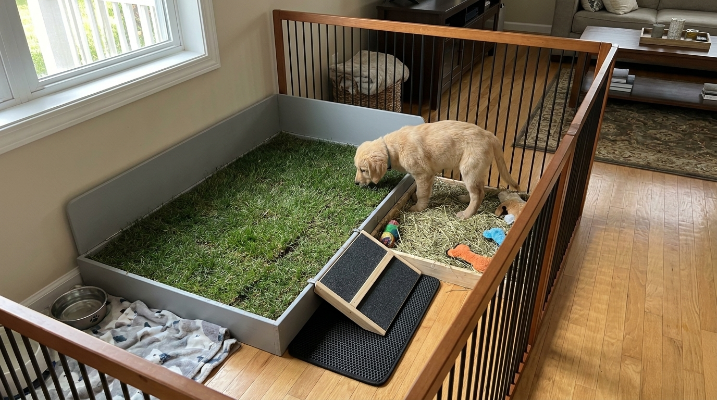
Creating a designated toilet area for your puppy is integral to successful potty training. This location should be safe, easily accessible, and away from distractions, allowing your puppy to feel at ease during potty time. Having a consistent spot helps your puppy recognize where it’s appropriate to relieve themselves, reinforcing positive behavior. To aid your puppy’s transition, consider using familiar scents or a specific surface, like grass or puppy pads, in this area.
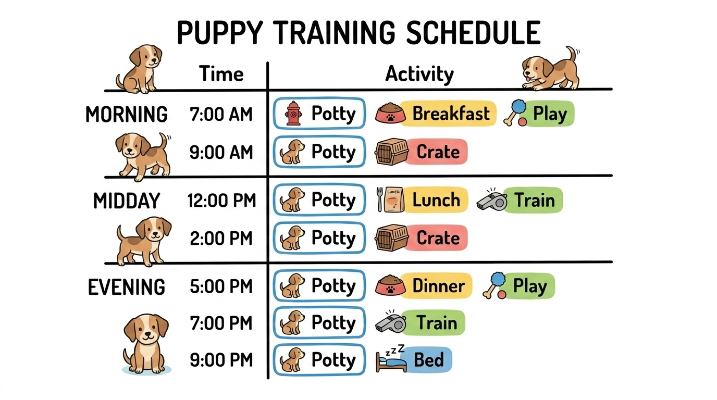
Establishing a daily routine is fundamental for both training success and your puppy’s overall well-being. Below is a sample schedule template to follow:
- 7:00 AM: Wake up and take the puppy to the toilet area for a potty break.
- 7:15 AM: Serve breakfast; follow with a potty break (15-20 minutes later).
- 8:00 AM: Playtime (30 minutes) encourages bonding and energy release.
- 8:30 AM: Nap time (1-2 hours).
- 11:00 AM: Another potty break to reinforce recognition of routines.
- 11:15 AM: Midday meal followed by another potty break.
- 12:30 PM: Afternoon playtime and exploration (1 hour).
This structured approach balances scheduled activities with ample opportunities for exploration, seamlessly incorporating potty breaks. Adjust the schedule based on your puppy's needs, but consistency is key for effective training.
Recognizing When Your Puppy Needs to Go
Learning to recognize your puppy’s bathroom signals can significantly reduce accidents during training. Puppies often communicate their needs through subtle changes in behavior before they have an accident, and paying attention to these signals allows owners to respond at the right moment.
Common signs that a puppy may need to eliminate include increased sniffing, walking in circles, sudden restlessness, whining, or moving toward doors and areas where they previously went outside. Some puppies may become noticeably distracted from play or appear unable to settle, which can also indicate that they need a bathroom break.
Keeping track of your puppy’s daily habits can make these patterns easier to identify. Recording feeding times, successful outdoor trips, and accident times can help owners understand their puppy’s routine and adjust the schedule accordingly. Over time, this observation allows the puppy and owner to develop better communication.
Using Cues and Positive Reinforcement During Potty Training
Positive reinforcement is one of the most effective methods for teaching puppies where they should eliminate. Instead of punishing mistakes, owners should focus on rewarding successful behavior immediately after it occurs. This approach helps puppies understand which actions lead to positive outcomes.
When taking a puppy to the designated toilet area, using the same verbal cue each time, such as “go potty,” can help create an association between the phrase and the desired behavior. The cue should be calm and consistent rather than repeated excessively, allowing the puppy to gradually connect the words with the action.
Once the puppy successfully eliminates in the correct location, immediate praise, treats, or affection can reinforce the behavior. The timing of the reward matters because puppies have a limited ability to connect delayed consequences with previous actions. Providing positive feedback at the right moment makes it easier for them to understand what they did correctly.
Supervision, Crate Training, and Managing Freedom
Supervision is especially important during the early stages of potty training because puppies are still learning household expectations. When owners closely observe their puppy, they have more opportunities to recognize warning signs and guide the puppy toward the appropriate location before accidents occur.
Crate training can also support potty training when used correctly. Many puppies naturally avoid eliminating where they sleep, making a properly sized crate a useful tool for encouraging bladder control between scheduled breaks. However, crates should never be used as punishment, and puppies should not be expected to remain confined longer than they can comfortably manage.
As puppies become more reliable, their freedom inside the home can gradually increase. Allowing access to additional areas too quickly may lead to setbacks, so owners should expand freedom slowly while continuing to monitor behavior. If accidents occur after increasing access, returning temporarily to a more controlled environment can help reinforce previous progress.
Handling Potty Accidents the Right Way
Accidents are a normal part of puppy development and should be treated as part of the learning process rather than a behavioral failure. Puppies do not understand punishment in the same way humans do, and harsh reactions may create fear without teaching the correct behavior.
When an accident occurs, the most effective response is to clean the area thoroughly and review what may have contributed to the situation. Enzymatic cleaners are helpful because they break down odor molecules that may encourage puppies to return to the same location.
Owners should consider whether the puppy had enough opportunities to go outside, whether the routine changed, or whether the puppy showed signals that were missed. Understanding the cause of an accident allows owners to adjust training strategies rather than simply reacting to the result.
Troubleshooting Common Potty Training Challenges
Some puppies experience setbacks even after making progress. Regression can happen because of changes in the household, stress, schedule disruptions, or developmental stages. Returning to a consistent routine and increasing supervision often helps puppies regain their previous habits.
If a puppy repeatedly has accidents despite a consistent training routine, owners should evaluate whether environmental factors are contributing to the problem. Issues such as unclear schedules, limited outdoor access, or too much freedom too early can interfere with successful training.
Patience remains important throughout the process because puppies develop bladder control and behavioral awareness at different speeds. Consistency usually produces better results than frequent changes in training methods.
When Potty Problems May Require Veterinary Attention
Although many potty issues are related to training, sudden changes in bathroom habits can sometimes indicate underlying health problems. Owners should pay attention to signs that are unusual for their puppy, especially if these changes appear suddenly.
Difficulty urinating, frequent attempts to urinate without producing much urine, blood in urine, persistent diarrhea, vomiting, unusual tiredness, or increased thirst may require veterinary evaluation. Addressing possible medical causes early helps prevent health problems from being mistaken for training issues.
Building Good Potty Habits for the Future
Potty training a puppy requires patience, consistency, and an understanding of how young dogs learn. The goal is not simply to prevent accidents but to help puppies develop predictable habits through positive experiences and clear guidance.
By maintaining a consistent schedule, recognizing behavioral signals, rewarding success, and responding calmly to mistakes, owners can create a training process that supports both good behavior and a stronger relationship with their puppy. Although every puppy progresses at a different pace, steady guidance during the early stages creates a foundation for better habits throughout the dog’s life.
Just For You
Parenting
Car Seats for Newborns A Practical Safety Guide for New Parents
April 22, 2026
Pets
How to Train a Cat With Positive Reinforcement
June 6, 2026

Tourism
Best Travel Destinations for Couples Thoughtful Places to Share Meaningful Moments
April 3, 2026

Shopping
Meaningful Choices The Ultimate Guide to Personalized Baby Gifts
April 21, 2026
Recommended For You
Parenting
Baby Weighted Sleep Sacks Safety Guidelines, Benefits, and Usage Tips
May 13, 2026
Pets
How to Train a Puppy to Toilet A Practical Guide for New Dog Owners
April 18, 2026

Tourism
Best Hidden Gems in the United States 2026 Travel Guide
April 29, 2026

Shopping
Personalized Family Gifts That Strengthen Meaningful Connections at Home
April 13, 2026